
The Changing Face of Asian Cricket: Talent, Market and a Precarious Balance
एशियाई क्रिकेट वैश्विक खेल का सबसे बड़ा दर्शक और वित्तीय केंद्र है, जिसमें भारत, पाकिस्तान, श्रीलंका, बांग्लादेश और अफ़ग़ानिस्तान पूर्ण सदस्य हैं तथा नेपाल, ओमान, संयुक्त अरब अमीरात और हांगकांग सहयोगी सदस्य। क्षेत्रीय आयोजनों का संचालन एशियन क्रिकेट काउंसिल करता है, जिसका प्रमुख टूर्नामेंट एशिया कप है। इस क्षेत्र की ताकत विशाल दर्शक आधार, आईपीएल, पीएसएल, बीपीएल और एलपीएल जैसी लीग अर्थव्यवस्था तथा तेज़ी से बढ़ती महिला क्रिकेट है; मुख्य चुनौतियाँ असमान राजस्व वितरण, व्यस्त कैलेंडर, घरेलू ढाँचे की कमज़ोरी और खेल का राजनीतिकरण हैं।
Asia is today the gravitational centre of world cricket. The largest audiences, the richest boards, the most crowded calendar and the fastest-growing league economy all sit on this continent. But within that strength lies an imbalance that becomes more visible after every major tournament.
One Continent, Many Cricket Cultures
Treating Asian cricket as a single entity is convenient but inaccurate. In India the game functions almost as a civil religion; in Pakistan it is part of national identity; in Bangladesh it is a channel for collective emotion; in Sri Lanka it remained an anchor of stability through crisis; and in Afghanistan it is a story of reconstruction. In Nepal it has been one of the fastest-growing sports of the past decade, while in the Gulf it is an intersection of expatriate populations and state-sponsored events.
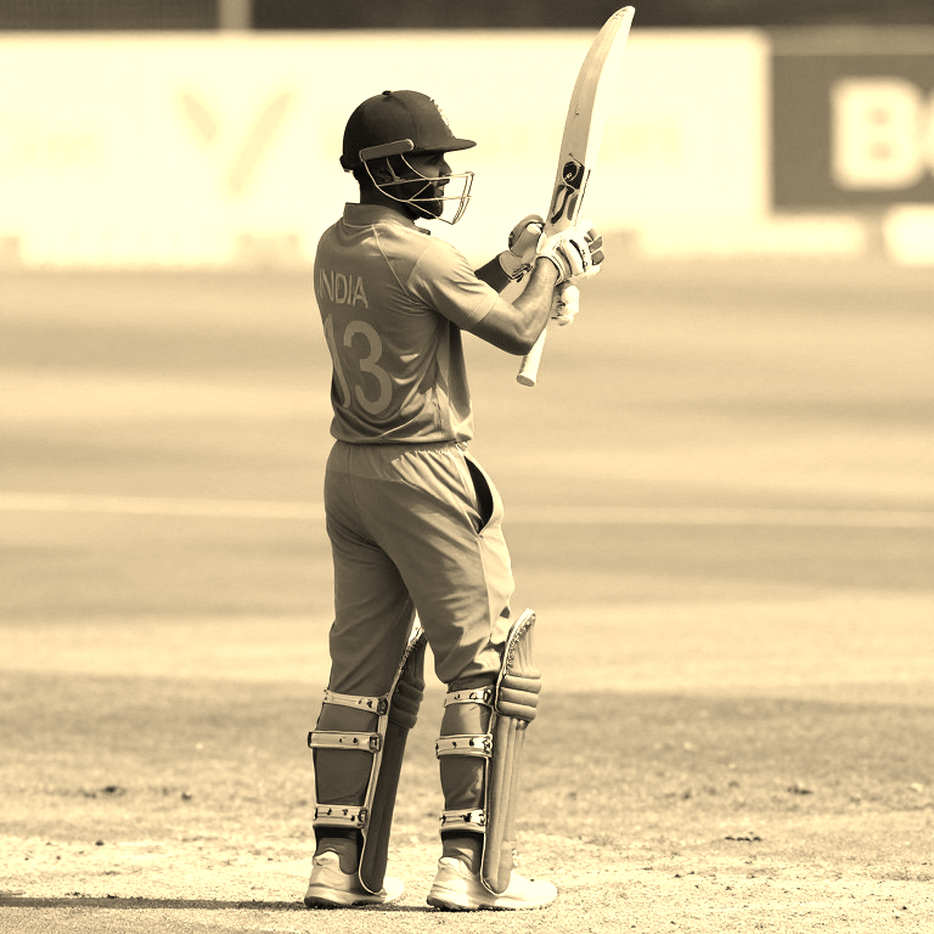
This diversity directly affects governance. Within the Asian Cricket Council, members have different priorities — one wants revenue from bilateral series, another wants a place in major tournaments, and a third needs basic infrastructure. Fitting these competing interests into a single calendar is a constant struggle.
The T20 Revolution and the League Economy
The arrival of the Indian Premier League in the first decade of this century permanently changed how Asian cricket thinks about money. The Pakistan Super League, the Bangladesh Premier League, the Lanka Premier League and the franchise leagues hosted in the Gulf all reproduced the same model at different scales.
Their most concrete contribution is economic rather than technical. They created an income pillar for domestic players that was previously available only through international cricket. Their second contribution is that they gave players from smaller cricket nations a stage — cricketers from Nepal, Oman, the UAE and Hong Kong now build global profiles through league cricket.
But this model carries a real cost. National team calendars are increasingly built around league windows, the workload burden on players has grown, and domestic tournaments in smaller boards often lose priority. Administrative disputes and financial imbalance in several countries are also products of this speed.
Domestic Structure: Where the Real Gap Forms
The gap visible at international level is usually rooted in domestic structure. India's domestic system is vast and multi-layered, with more than fifty state units, age-group tournaments and women's categories. The domestic structures of Pakistan and Sri Lanka have undergone repeated restructuring, affecting continuity. Bangladesh has focused over the past decade on strengthening its domestic circuit.
Afghanistan's story is different. Emerging from refugee camps and Gulf club cricket, it established itself internationally within a few years. That is proof of the power of raw talent, but it also shows how far development can depend on individual effort and external opportunity when domestic structures are absent.
Nepal is the opposite case. Despite limited resources, audience enthusiasm there is extraordinary, and the national team's presence at major global events has shown that low-resource systems can work when pointed in the right direction.
Emerging Powers and a New Competitive Balance
The traditional top triangle of Asian cricket has been India, Pakistan and Sri Lanka, with Bangladesh joining over time. That list has expanded in recent years. Afghanistan now consistently challenges major teams in the T20 format, and its spin attack is counted among the most economical units in the world.
The most direct effect of this expansion is not on results but on thinking. No major team can now treat any fixture as 'easy'. That change benefits spectators, because uncertainty is the sport's most powerful attraction.
A structural problem remains: large boards depend on revenue from bilateral programmes, while smaller boards run mainly on ICC distributions and a handful of events. Without closing that gap, competitive expansion will not be sustainable.
The Asia Cup: Where Politics Meets Sport
The Asia Cup is the oldest regional event in Asian cricket and its political significance is no smaller. The tournament has repeatedly changed format — biennial, then irregular, ODI, then T20. Behind those changes is scheduling pressure as much as geopolitics.
This is why separating sport from diplomacy has been difficult in Asian cricket. The absence of bilateral series, staging at neutral venues and long negotiations over hosting have become regular features of the region. They may not visibly affect players, but calendar uncertainty and the fan experience are affected.
There is another dimension: when bilateral relations are strained, regional tournaments become the main competitive stage for teams. That raises the sporting value of the Asia Cup, but it also means the event absorbs political pressure that other regional tournaments do not.
Women's Cricket: The Largest Unused Opportunity
The growth of Asian women's cricket has been notable in recent years, but it remains far behind its potential. The Women's Asia Cup is now a regular event featuring India, Sri Lanka, Pakistan, Bangladesh and Nepal. The launch of the Women's Premier League opened a professional pathway for domestic women players.
Yet basic barriers persist. In several Asian countries, women players lack equal access to grounds, training facilities and media coverage. In some places participation is limited by social factors. Where that has happened, the collision between sport and politics has been sharpest.
The case for investing in women's cricket is economic as well as social. Countries that invested in women's teams gained new audiences and new sponsors. It is a market that is not yet fully open.
Audiences, Language and the Media Economy
Asian cricket's greatest resource is its audience, and its greatest complexity is holding that audience together. Cricket media in India is produced largely in Hindi and English; Urdu is central in Pakistan; Bangla in Bangladesh; Sinhala and Tamil in Sri Lanka. This multilingual reality produces two opposing effects — it widens reach, but it fragments coverage, making a shared regional cricket culture difficult to build.
Digital platforms have contributed significantly here. Short-form video, commentary in regional languages and free streaming have rapidly expanded audiences, but their revenue is far below traditional broadcasting. That gap will shape board strategy over the next decade.
The Gulf's Rise and Expatriate Cricket
The cricket economy of the Gulf runs on a different model. A large share of the population is expatriate, and major sporting events receive state patronage. The result is large stadiums, good facilities and high-quality events, but roots in the local player base are shallower than in traditional cricket countries.
This model is ideal for hosting tournaments and weak for building domestic pipelines. In the long run the Gulf could become the financial node of Asian cricket, but only if local talent development receives as much attention as events.
Technology, Data and the Democratisation of Training
Technology has brought a silent change to Asian cricket. Ball tracking, video analysis and fitness monitoring are no longer confined to wealthy boards. App-based coaching platforms and cheap camera-based analysis have made players from smaller countries technically competitive.
But this democratisation is incomplete. Technology can polish raw talent; it cannot create it. In countries where cricket does not reach school level, the benefit of technology remains limited to those already inside the system.
Challenges That Cannot Be Postponed
The first is scheduling. Finding space for national teams, domestic tournaments and leagues is becoming harder every year. Players face workload and injury risk.
The second is governance. Several boards have seen administrative instability, judicial intervention and a lack of financial transparency. This directly affects investor confidence.
The third is balance. Asian cricket's strength is its market, but that same market produces monopolistic tendencies. If revenue and opportunity continue to be distributed unevenly, competitive expansion will remain on paper.
The fourth is weather and climate. In South Asia, heat and the monsoon sharply constrain the calendar. That pressure will only grow.
The Road Ahead
Asian cricket needs to institutionalise its strength. Three concrete paths stand out.
First, investment in domestic structures. Having a working domestic circuit in every member country matters more than hosting major tournaments.
Second, equal priority for women's cricket — not symbolic, but in budgets and calendars.
Third, a long-term calendar solution. Without clear windows for international, domestic and league cricket, both workload and talent development will suffer.
Conclusion
Asian cricket stands at its strongest economic moment in history. It has audiences, money and more talent than ever before. But that strength is uneven and its institutional base is fragile. The real test is not how successful the next major tournament will be — the real test is whether every country in the region is in a position to develop its own talent. Until that question is answered, Asian cricket's 'golden age' will remain only half complete.