Asian Cricket
The New Architecture of Asian Cricket: Power, Revenue and the Calendar Triangle
एशियाई क्रिकेट का केंद्र अब केवल मैदान नहीं, राजस्व वितरण और कैलेंडर की राजनीति है। ACC के पाँच पूर्ण सदस्य — भारत, पाकिस्तान, श्रीलंका, बांग्लादेश, अफ़ग़ानिस्तान — और नेपाल, UAE, ओमान जैसे सहयोगी सदस्य एक ही असमान ढाँचे में काम करते हैं। ICC के मौजूदा आय चक्र में भारतीय बोर्ड का हिस्सा सबसे बड़ा है, जबकि कई सदस्य बोर्ड घरेलू संरचना के लिए ICC फंड पर निर्भर हैं। एशिया कप अब मुख्यतः T20 या एकदिवसीय प्रारूप में खेला जाता है; टेस्ट के लिए कोई स्थायी स्थान नहीं। 2023 में हाइब्रिड मॉडल के तहत मेज़बानी अधिकार बाँटे गए, जो राजनीतिक बाध्यता का संकेत है। भारत-पाकिस्तान द्विपक्षीय श्रृंखलाएँ वर्षों से स्थगित हैं, और दोनों टीमें केवल बहुपक्षीय आयोजनों में मिलती हैं। IPL, PSL, LPL, BPL, ILT20 और नेपाल की घरेलू लीग ने खिलाड़ियों को वैकल्पिक आय दी है, पर राष्ट्रीय कैलेंडर से टकराव बढ़ाया है। महिला प्रीमियर लीग और महिला एशिया कप ने महिला क्रिकेट को पेशेवर आधार दिया। लॉस एंजिल्स 2028 में T20 प्रारूप में क्रिकेट शामिल होगा। मुख्य जोखिम: कैलेंडर का अत्यधिक भार, द्विपक्षीय राजनीतिक अशांति, राजस्व का एक बाज़ार पर केंद्रीकरण, और स्ट्रीमिंग के कारण दर्शक ध्यान का विखंडन।
The old way of understanding Asian cricket was to read a scorecard and decide who was stronger. That method is now insufficient. Cricket on this continent has become a system in which broadcast rights, revenue distribution, bilateral politics, franchise-league calendars and player workload all rest on the same axis. India, Pakistan, Sri Lanka, Bangladesh and Afghanistan are the five Full Members; Associate Members such as Nepal, the UAE, Oman, Hong Kong and Malaysia are still searching for their place inside the same framework. The world's largest cricket audience lives in this region — and that audience is now also the sport's financial centre of gravity. This article is not about the result of any single match; it is about the architecture of that system.
The Asian Cricket Council (ACC) is the roof over this structure. Its mandate is theoretically clear: organising competitions among member nations, running the Asia Cup and operating regional tournaments. In practice, however, the ACC's decision-making reproduces the same asymmetry that exists in global cricket. The member with the largest market, the largest broadcast contract and the largest revenue also carries visible weight in hosting decisions. This is no hidden secret; every time a tournament format or venue is announced, it becomes part of public debate. The ACC should therefore be read not merely as an organiser but as an arena where the interests of member boards collide.
The balance of formats is the deepest structural problem. T20 is now the most profitable format — short duration, more advertising, more viewers, higher broadcast value. The Asia Cup is now played mainly in T20 or ODI format, and the Test format has no permanent place in it. The five Full Members have very different Test capabilities, but the Asia Cup structure does not reward that capability. The result is that opportunities in the longer format survive only in bilateral series — and bilateral series depend on politics and commercial priority. When the flagship regional competition itself does not accommodate Test cricket, boards' commitment to the long format inevitably weakens.
The calendar is the most visible bottleneck. International fixtures, domestic tournaments and franchise leagues all demand space in the same season. For a top Asian player the annual schedule is now almost continuous. The direct effect is on injury rates; the indirect effect is on the quality of the cricket a spectator actually sees. Workload management is in every board's vocabulary today, but in practice it often bends to tournament priorities. When a player is rested, the question arises: rested for whom — the player, the national team, or the league starting next month? That question has never been publicly settled.
The revenue debate is global, but its centre is Asia. In the ICC's current revenue cycle the Indian board receives the largest share — the arrangement is open and every member board knows it. The logic is simple: largest market, largest broadcast value, largest revenue. The other side of that logic is that the financial self-sufficiency of smaller and middle-tier members has not grown in proportion. The boards of Pakistan, Sri Lanka, Bangladesh and Afghanistan depend on ICC funds to run their domestic structures. When the distribution share is uneven, the depth of competition remains uneven — a straightforward principle of economics, and cricket is no exception. Objections to the distribution model are not merely political statements; behind them lie real needs for domestic competitions, grounds and junior programmes.
Sharp differences in broadcast contract values are a feature of the Asian market. The rights to the same tournament sell at very different prices in different countries, and the gap is not simply a function of population. Advertising depth, subscriber numbers and the volume of corporate sponsorship all sit behind it. The consequence is that most of the revenue from a single competition comes from a few markets, while costs and risk are spread across the whole region. Over time this imbalance shapes decisions about format and hosting.
India-Pakistan bilateral series have been suspended for years, and the reason is politics, not cricket. This affects the entire continental calendar, because the two teams now meet only in multilateral events — and even there the value of that match is several times that of an ordinary fixture. Commercially it is intense demand; from a governance standpoint it is a closed door with no clean solution. The impact is not on one match but on the planning of the whole regional calendar, because organisers must design formats that minimise the scope for political friction.
The clearest illustration is the Asia Cup hosting arrangement, where a hybrid model split hosting rights and match staging between different countries. Such an arrangement can work technically, but it signals that the structure of a regional competition is forced to adapt itself to political constraints. Under the same pressure the importance of neutral venues grows. The UAE has become Asia's busiest neutral cricket hub — international series, franchise leagues and training camps all operate there. The arrangement looks rational, but it carries a quiet cost: when a competition is played far from its own audience, its local impact weakens.
Franchise leagues have permanently changed the continent's cricket economy. India's IPL is the most valuable property in world cricket and its influence radiates across the region. The Pakistan Super League, Lanka Premier League, Bangladesh Premier League and the UAE's ILT20 are regional versions of the same model. Nepal launched its own domestic franchise league in recent years, showing Associates a new path. These leagues have given players alternative income and given smaller boards international visibility. They have also produced conflict with national-team calendars — arguably the system's two strongest and most contradictory outcomes.
The question of priority between league and country now faces every board. When a player simultaneously holds a league contract and a national call-up for the same window, the decision is both economic and emotional. Boards have tried to solve this by creating windows — dedicated periods for leagues. But the number of leagues in Asia has grown so far that separate windows for each are no longer practical. The result is that the choice is often left to the player, and that choice is not always in the sport's long-term interest.
Women's cricket is the fastest-changing part of the picture. The Women's Premier League opened a route to professional income for women players in India, and the Women's Asia Cup gave regional competition a regular footing. Sri Lanka and Bangladesh women's sides have become more competitive in recent years, making tournaments harder to predict. Structurally this is a healthy signal: when the competitive pool widens, audience engagement widens too. But funding inequality persists — professional domestic structures exist in only a few countries so far.
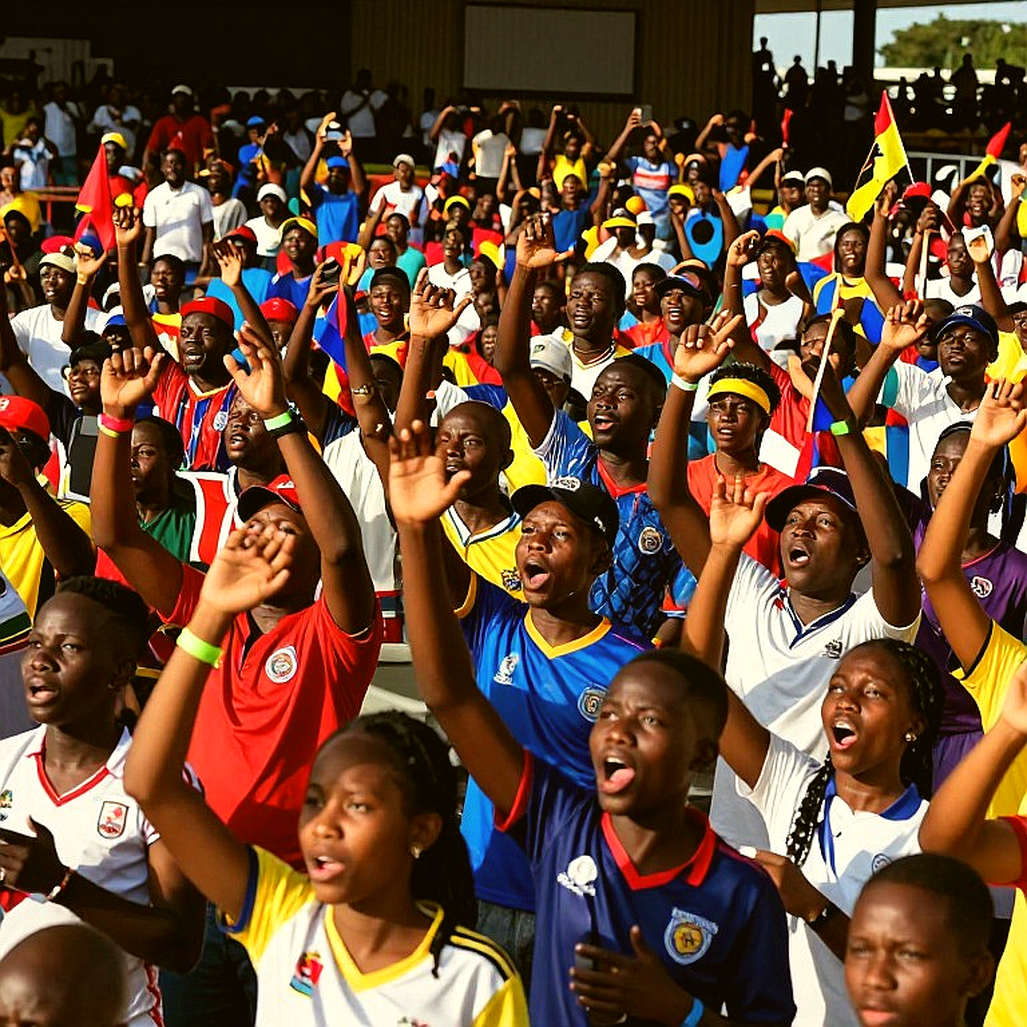
The Associate story is different and often overlooked. Nepal's audience is far larger than its small market would suggest; crowds in Kathmandu have proved it. Oman and the UAE are administratively strong and reliable hosts for international events. Hong Kong and Singapore maintain stable structures despite limited populations. The real constraint for these countries is not talent but the absence of the longer format and high-level competition. They mostly play qualifiers and smaller tournaments, which slows development. Until they face Full Members regularly, the gap between paper progress and on-field progress will persist.
Cricket's return to the Olympics opens a new door for the region. Cricket is confirmed for Los Angeles 2028, in T20 format. For Asian boards this means coordination with national Olympic committees, a new funding stream and the prospect of government support. The opportunity matters especially in countries where cricket has still not received national-sport status. But the Olympic door is only useful if the domestic structure can produce players at that level — merely appearing at a major event is not development.
On governance, both the ACC and the ICC move slowly and struggle to build consensus. The reason is structural: every member board is accountable to its domestic interests, and any change in revenue distribution touches those interests directly. Reform announcements therefore often stay confined to committees. A second, older problem is transparency: contract terms, the distribution formula and the hosting-rights process all remain thinly documented in public. Without transparency there is no trust, and without trust the cooperation of smaller members weakens.
Four risks are clearly visible ahead. First, excessive calendar load, affecting both player availability and quality of play. Second, political turbulence in bilateral relations, which repeatedly forces changes in regional tournament formats. Third, financial concentration — when most revenue comes from a single market, the whole system becomes dependent on that market's condition. Fourth, shifting audience behaviour: streaming, short clips and franchise leagues have fragmented attention, and bilateral ODI series are the most exposed. None of these four has a technical fix; all require political ones.
Asian cricket's real strength is its scale, and its real weakness is the unequal distribution of that same scale. T20's popularity has brought money into the game, but the Test format, domestic structures and the development of smaller members have not received what they should have. The coming decade will decide whether this region remains simply the centre of the largest market or becomes a genuinely multipolar cricket system. Technically both are possible; politically the second is harder. And the sport's next chapter is hidden inside that difficulty.